Most deals take 30 to 90 days from signed LOI to closing. Here’s what happens in that window and how to keep yours on track.
Why deals take longer than you think
Most business owners expect a deal to close a few weeks after everyone agrees on price. In reality, getting from a signed letter of intent (LOI) to closing typically takes 30 to 90 days, and the key documents go through multiple rounds of drafts along the way. That generally holds whether you’re buying or selling, using a lender or paying cash, and even when the deal looks simple. It isn’t a sign that something is wrong. It’s what a well-run deal looks like.
Below we walk through the stages every deal goes through, what’s different for buyers and sellers, and how the right legal team protects you and keeps the deal moving.
The deal timeline at a glance
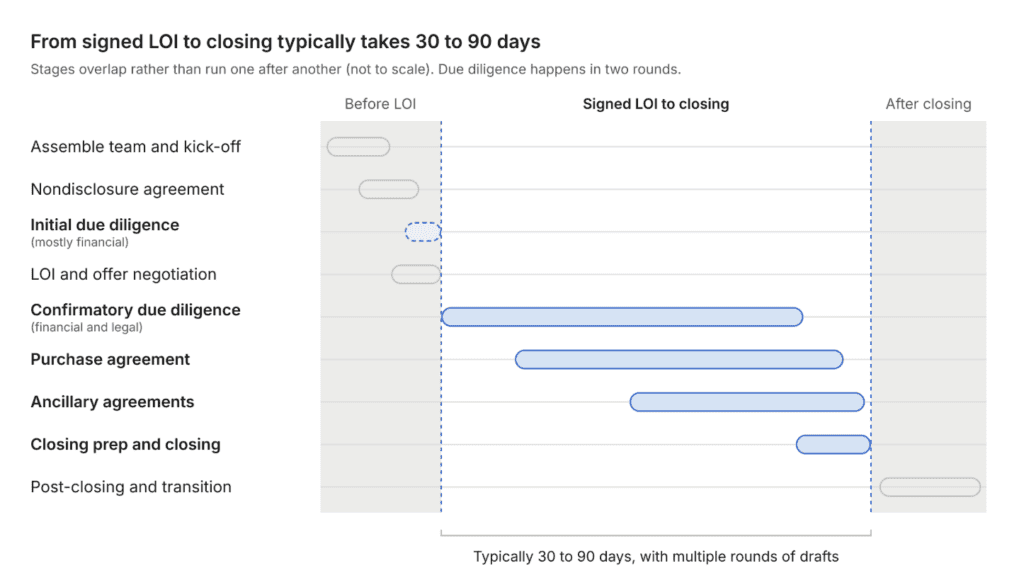
Every deal moves through the same core stages, buy-side or sell-side. The clock that matters starts when the LOI is signed: from there to closing typically takes 30 to 90 days.
M&A deal stages: Signed LOI to closing
The overlap is the point. Due diligence, the purchase agreement and the ancillary agreements (noncompete, transition agreement, seller note, lease assignment and consents) all run at the same time, and what turns up in one often changes the others.
Due diligence also isn’t a single step. Buyers do an initial round, mostly financial, before the LOI so they can make an informed offer. After the LOI is signed, a second and deeper round begins, covering both the financials and the legal side: contracts, leases, employees, licenses, liens and litigation. When someone says “diligence is done,” it often means one advisor, usually the financial advisor or CPA, has finished their piece. Legal diligence may still be underway.
Why every deal goes through multiple drafts
A first-time buyer or seller often assumes the purchase agreement will be written once, signed and done. It almost never works that way. Here’s why:
- More people weigh in than you expect. Buyer, seller, both attorneys, the broker, CPAs, the landlord and any lender all review the documents. Each round of comments produces a new draft.
- Due diligence changes the deal. What the buyer learns about the business can lead to changes in price, structure or the protections each side needs.
- Funding shapes the documents. SBA and bank lenders often require specific terms before they’ll fund. Cash and self-funded deals skip that step, but every term is still negotiated between buyer and seller.
- Everything has to match. The purchase agreement, noncompete, seller note, lease assignment and closing documents all depend on each other. One change ripples through the rest.
Multiple drafts are how the documents end up reflecting the deal you actually agreed to. Skipping that work is how people end up with terms they didn’t expect.
What to expect when you’re buying a business
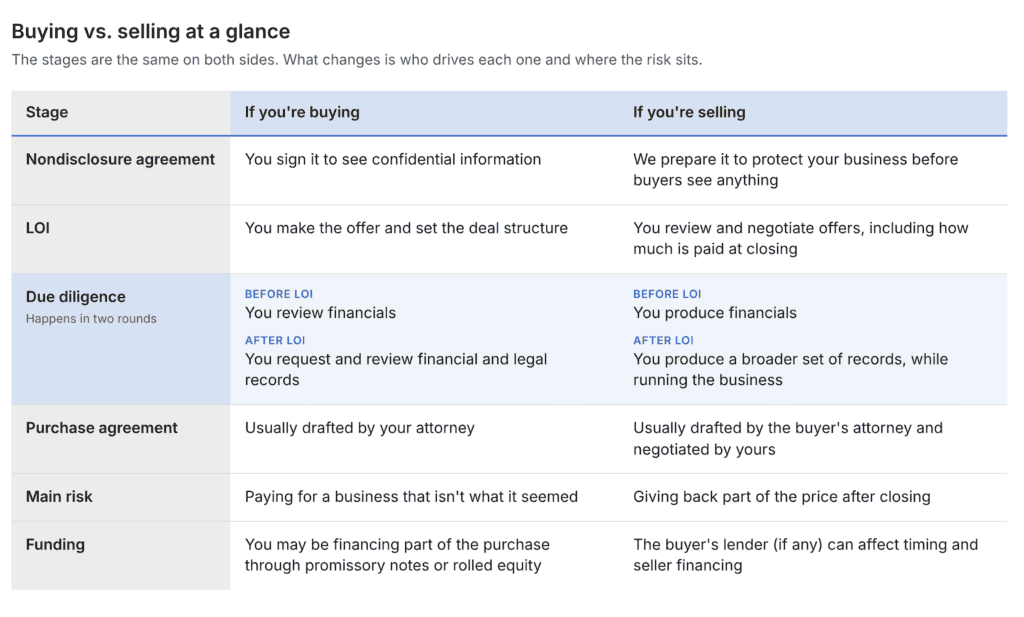
As a buyer, your job is to find out exactly what you’re getting and make sure the documents protect you if it turns out to be different. Expect the following:
- You lead due diligence. Before the LOI, you review enough of the seller’s financials to set price and structure. After the LOI, you and your advisors dig deeper into the financials, tax returns, contracts, lease, employee matters, licenses and liens. Your CPA or financial advisor completes the financial review while your attorney reviews the legal risk. One advisor finishing their part doesn’t mean diligence is complete.
- Your funding sets part of the pace. If you’re using an SBA or bank loan, the lender runs its own underwriting and reviews the deal documents, which adds requirements and time. If you’re self-funding, you avoid the lender’s process but carry more of the risk yourself, so diligence matters even more.
- The LOI is your blueprint. It sets price, structure (asset or stock purchase), seller financing, working capital and the seller’s transition role. Terms left vague here get negotiated again later, usually when you have less leverage.
- The purchase agreement is your protection. The seller’s promises about the business (representations and warranties) and your remedies if they’re wrong (indemnification, escrow or holdback) are what protect your investment after closing.
- Third parties can slow things down. Landlord consent to a lease assignment and consents under key customer or vendor contracts are common late delays.
Plan your start date, financing and personal timeline with the full process in mind, not the best-case version.
What to expect when you’re selling your business
As a seller, your job is to get the deal closed on the terms you agreed to and limit what can come back to you after closing. Expect the following:
- Due diligence will take your time. Expect financial requests before the LOI, then a longer, more detailed request list after it, covering legal as well as financial records. You gather all of it while still running the business. For most sellers, this is the biggest surprise of the process.
- The buyer’s attorney usually drafts first. That first draft favors the buyer. Your attorney’s job is to negotiate it back to the deal you agreed to.
- Getting paid isn’t always all at closing. Seller notes, earnouts, escrows and holdbacks mean part of your price may arrive later or depend on future events. How those terms are written decides how protected that money is.
- Your promises follow you. The representations and warranties you make about the business, and the indemnification tied to them, set your exposure after the sale.
- The sale shapes your next chapter. Noncompete and consulting or transition agreements set what you can do, and for how long, after you hand over the keys.
- The buyer’s funding affects you too. A buyer using an SBA or bank loan brings lender requirements into the deal, which can affect seller notes and timing. A cash buyer can move faster but will still negotiate every term.
Keep the business running strong throughout. Performance during the deal matters, and a dip can reopen price discussions.
Why an experienced M&A attorney is critical to the deal
Brokers find the deal, lenders fund it and CPAs check the numbers. Your attorney is the one making sure the deal you sign is the deal you think you’re signing. At Doida Crow Legal, that’s what we do:
- We focus on M&A. Our practice is corporate, M&A and securities law, not general practice. We know which terms matter in a deal this size and which ones are worth fighting for.
- We protect what happens after closing. Most deal problems show up months later: a missed liability, an earnout dispute, a noncompete that’s broader than expected. The drafting rounds are where those problems get prevented.
- We keep the deal moving. We manage the drafts, track open issues and coordinate with the other side’s attorney, the broker, the lender and your CPA, so the timeline doesn’t stall waiting on someone.
- We prepare the closing checklist. Every document, consent, payoff and signature gets tracked so closing day happens on schedule.
- We work on fixed fees. You know your legal cost upfront, so you can call us when something comes up instead of worrying about a ticking clock.
A deal is usually one of the largest financial decisions a business owner will make and engaging experienced M&A counsel is how you protect it.
How to keep your deal on track
You can’t control every party, but you can control your side. These habits make the biggest difference:
- Bring in your attorney before you sign the LOI. The LOI sets the framework for everything after it. Changing terms later is harder and more expensive.
- Get your CPA involved early. Buyers need the numbers checked. Sellers need to plan for the tax impact of the deal structure.
- Organize records now. Sellers should pull financials, tax returns, contracts and the lease together before an LOI is signed. Expect financial requests before the LOI and a much broader list after it. Buyers should know what they’ll ask for at each stage.
- Raise the critical contracts early. Obtaining key customers’ or landlords’ consent to the transaction (if it’s needed) are one of the most common late delays on both sides.
- Respond quickly. Answer diligence requests and draft questions within 1 to 2 business days. Every slow reply pushes the closing date.
- Don’t renegotiate on your own. Loop in your attorney before agreeing to new terms directly with the other side.
- Plan for the full timeline. Build your financing, start date and personal plans around 30 to 90 days from signed LOI, not the best case.
Start with the right expectations
A deal that takes 30 to 90 days and several rounds of drafts isn’t a deal in trouble. It’s a deal being done right. Owners who know what’s coming make better decisions, stay calm under pressure, and close on better terms.
Thinking about buying or selling a business? Talk with the Doida Crow Legal team before you sign an LOI. We’ll walk you through what to expect for your specific deal and how we can help protect your investment. Contact us at info@doidacrow.com or call 720-571-4062.